


Parenting Isn’t About Doing More.
It’s About Doing What Matters.
Most parents don’t lack love, effort, or intention.What they lack is clarity.
Clarity about what to do today.
Clarity about what actually supports development.

Clarity without scrolling, saving, or second-guessing.
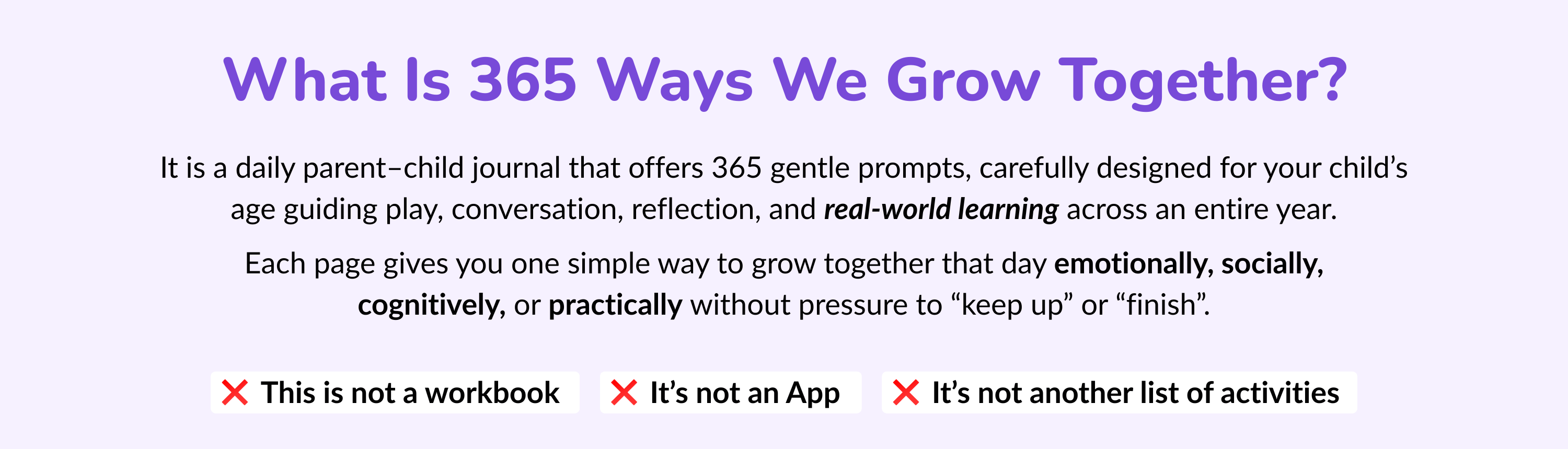
365 Ways We Grow Togetherwas created to bring that clarity gently, realistically, and without pressure.
If You’re a Parent, This Might Sound Familiar
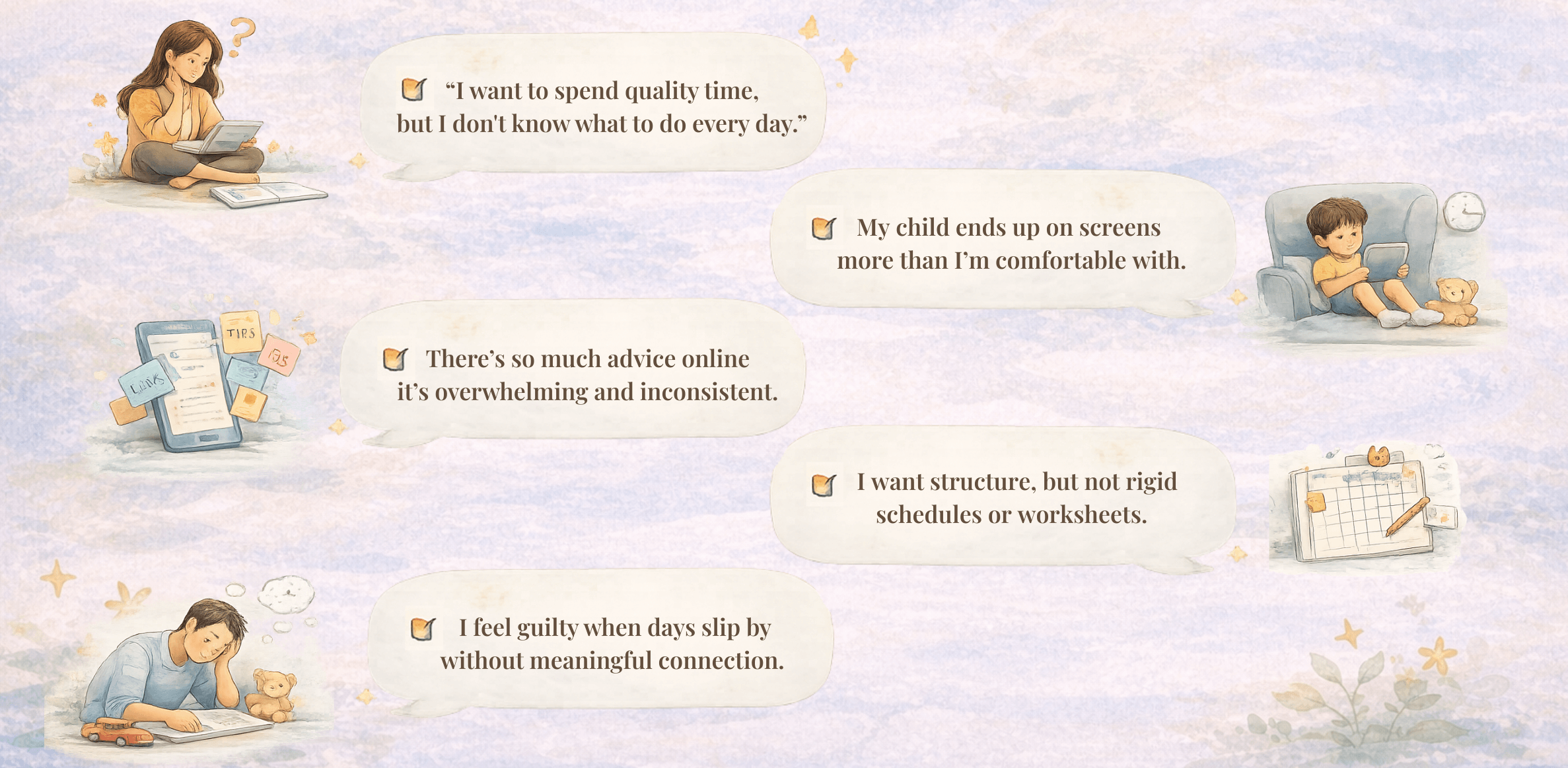
Parenting shouldn’t feel like guessing.
It should feel supported.
How the Journals Work

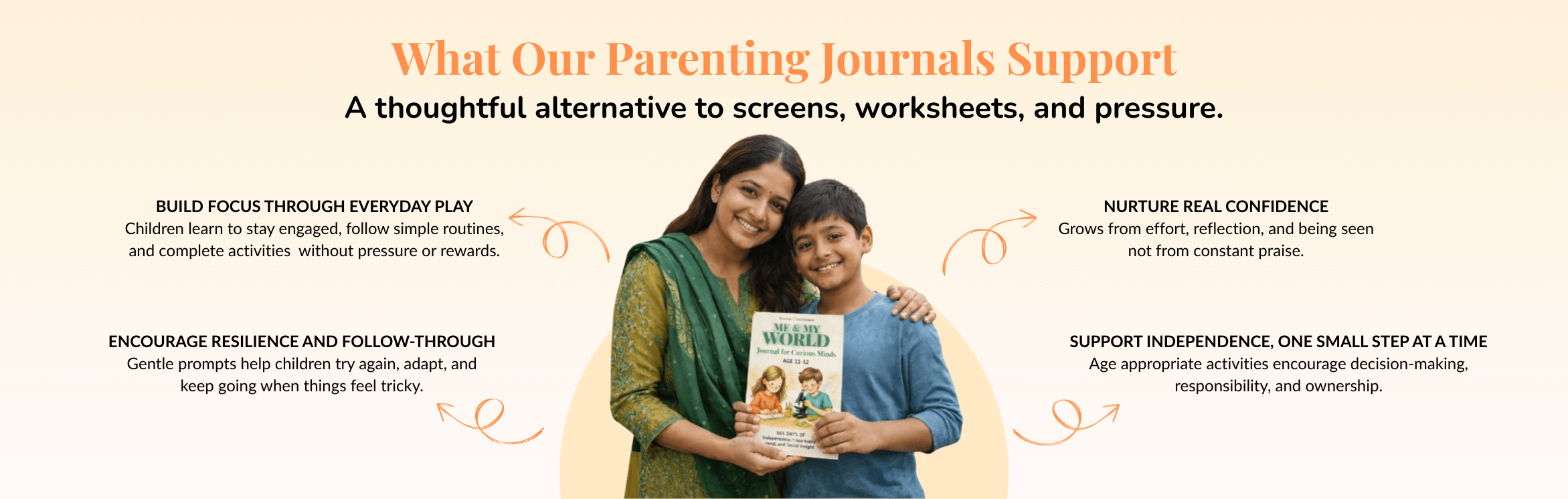
Choose Your Child’s Age
Each journal matches developmental milestones no guessing, no gaps.

Follow One Gentle
Prompt a Day
Miss a day? Just continue. No pressure.

Watch Growth Add Up
Confidence, independence, emotional awareness built slowly and naturally across the year
Explore the Journals by Age
A Thoughtful journey from early childhoodtopre-teen years

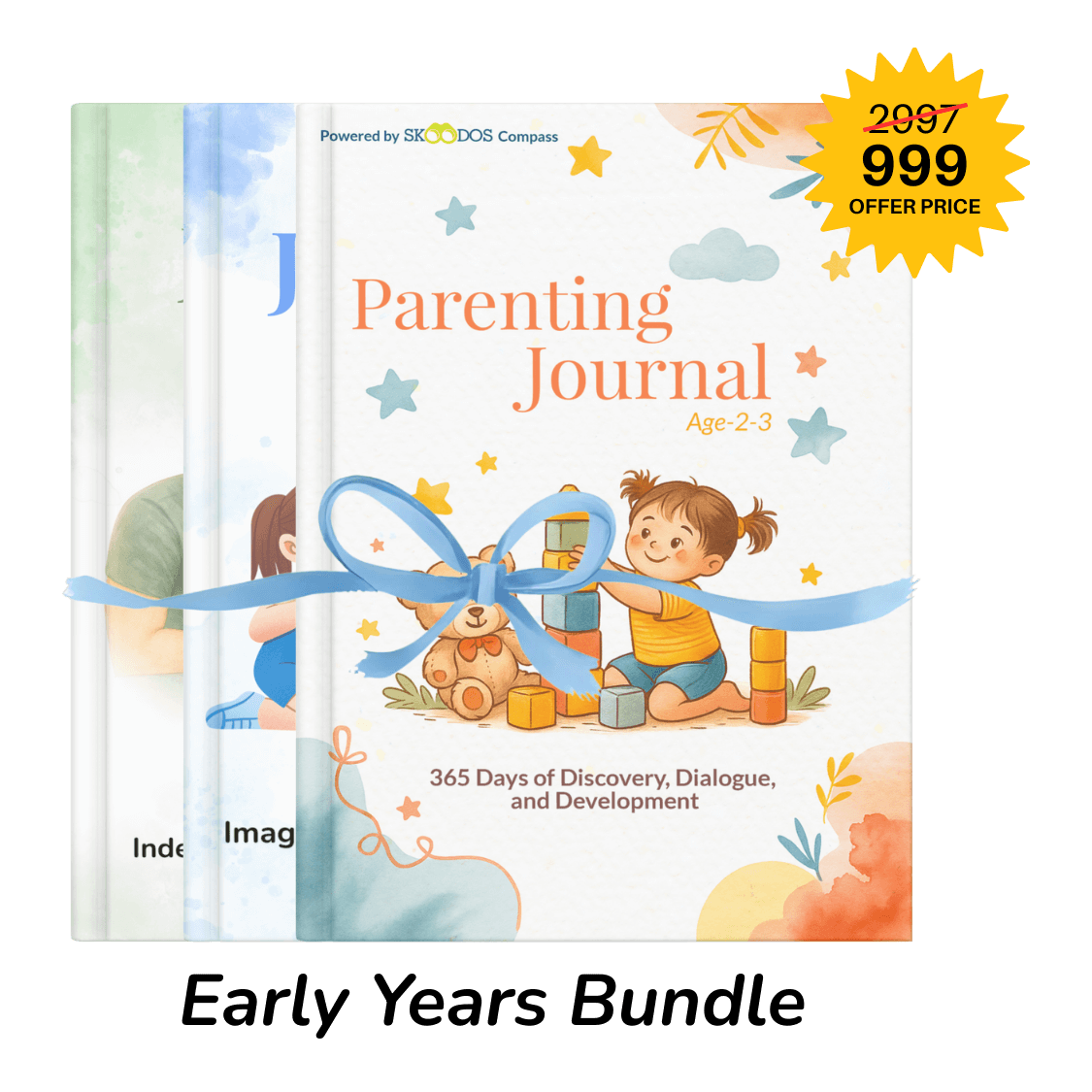
Early Years




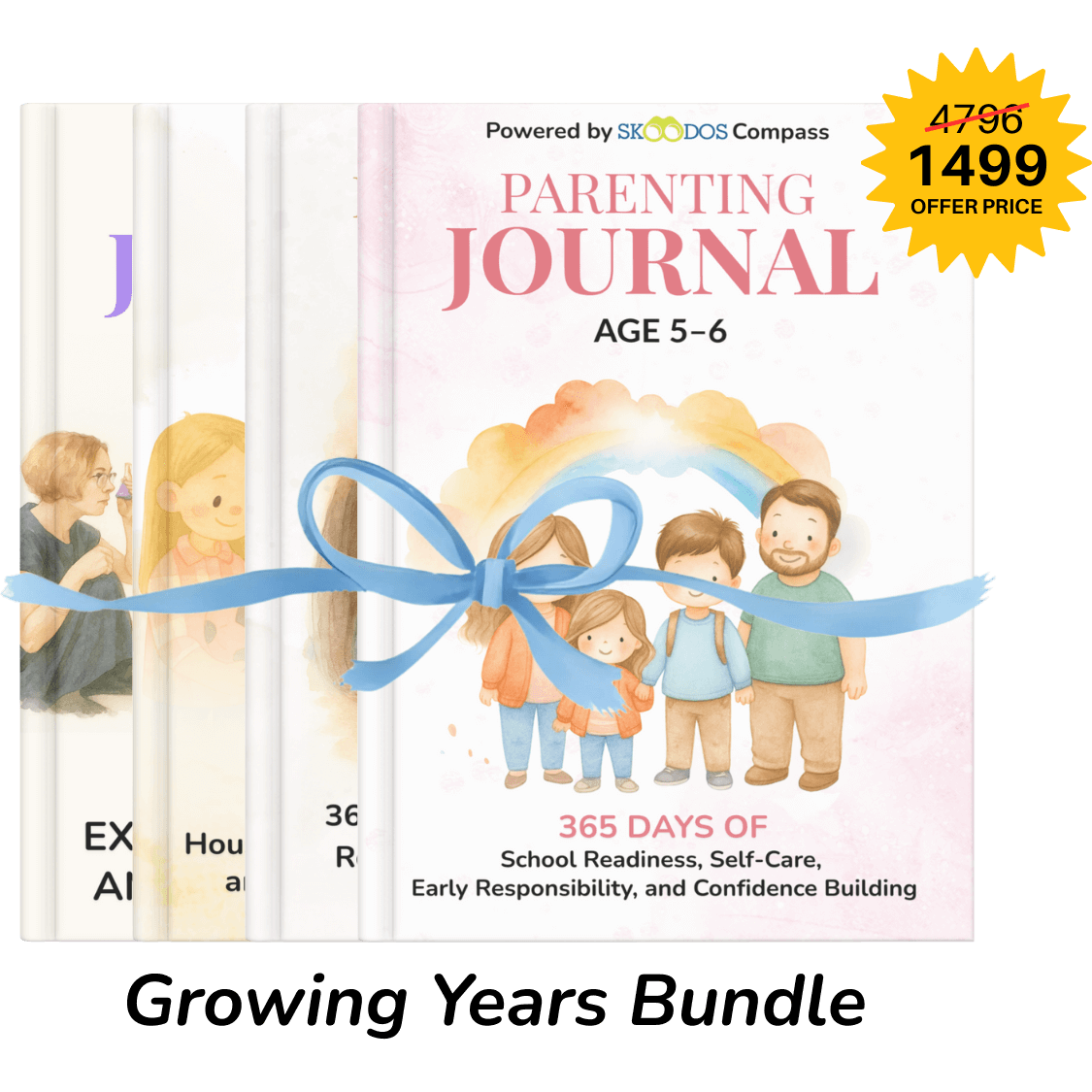
Growing Years





Pre-Teen Years



Choose the Journal That Matches Your Child Today

90%
brain development happens before age 5
but what matters is how those years are guided.
Better Value Bundles

A Journal Parents Return To
Not Just Finish
Supporting play, learning, and connection across the early years.

Ananya Mathur
Parent of a 3 year-old
Bengaluru
"This journal gave us a rhythm. Even on busy days, we find a few minutes to slow down and connect."

Rohit Kapoor
Parent of a 5-year-old
Pune
"I wanted something that supported learning without turning play into pressure. This feels calm, thoughtful, and doable."

Neha Sharma
Parent of a 4-year-old
Gurugram
"We started for the activities, but the journal has already become a keepsake. I’m glad we wrote things down."

Aditi Rajput
Parent of a 9-year-old
Mumbai
"I’ve noticed my child trying things more confidently. There’s pride in finishing a page, not perfection."
A Different Kind of Learning Companion
Built for everyday parenting, not perfect routines.
Our Parenting Journal

Play-based guidance rooted in child development

Flexible, undated days that follow your family’s rhythm

Parent-guided and shared

Encourages conversation, reflection, and connection

Screen-free and hands-on

Becomes a keepsake of growth and memories
Typical Activity / Workbooks

Task-based pages focused on completion

Fixed schedules that create pressure

Often designed for the child to complete alone

Emphasizes right answers and outcomes

Often paired with apps or screen prompts

Usually discarded once completed
Questions Parents Often Ask
If you’re wondering, you’re not alone!
Do we have to do this every single day?
Not at all. The journal is designed to support your rhythm not control it. You can skip days, repeat favorites, or start anywhere. What matters is connection, not consistency.
What if my child doesn’t feel like doing the activity?
Children lead the pace. Some days they’ll dive in, some days they’ll simply observe. Both count as learning. The journal offers invitations, not instructions.
Is this academic or school-focused?
No. These journals are development-focused, not academic. They build emotional awareness, curiosity, independence, and communication the foundations that support learning later.
How much time does one day take?
Most activities take 10–20 minutes, and reflection can be as short as a few words. Many families naturally extend it when the moment feels right.
Is this suitable if my child is already in school?
Yes. The journal complements school life by supporting what classrooms can’t always slow down for emotions, self-expression, and connection at home
What if we start late in the year?
That’s perfectly okay. The journal is undated and flexible. Start on any day that feels right.
Is screen use required?
No screens are required. The journal is intentionally screen-free and encourages hands-on play and conversation.
Can more than one parent use it?
Absolutely. Many families use it together — parents, caregivers, even grandparents. The journal belongs to your family, not a single adult.
Still wondering?
Start with the age your child is in today. You can always grow from there.